Saturday, November 19, 2016

Just Jennifer

Plaid and Plagiarism by Molly MacRae

Janet Marsh, her daughter and two friends have all moved to Inversgail, Scotland to run a bookstore/tearoom/bed and breakfast; upon arrival in Inversgail, Janet learns she cannot move into the house she and her ex-husband owned and have been renting out because someone has turned it into a garbage dump.  Janet blames local newspaper columnist Una Graham (fondly known as Ug) but when she and her friends try to catch Una in the act they instead find her body in Janet’s shed.  Now in addition to learning to run Yon Bonnie Books, setting up the tearoom and readying the B&B, Janet has a murder to look into; a stack of unpleasant blackmail letters found in the back of the story opens up new possibilities for suspects, including Janet’s ex-husband.  To add to Janet’s already too long to-do list, she has been tapped by the local librarian to be the judge of the writing contest for Inversgail’s upcoming literature festival, along with a reclusive author who is also Janet’s next door neighbor and who may just be on the suspect list.  This first book in a new series introduces readers to a delightfully quirky cast of characters in a charming setting that they will look forward to returning to time and time again.
  

Monday, October 31, 2016

Just Jennifer

The Clancys of Queens by Tara Clancy

In this laugh-aloud no-holds barred memoir, stand-up comedian, writer Tara Clancy details growing up in Queens during the 1980’s and 1990’s.  Tara was born to an Irish policeman and an Italian social worker, both with big families.  She spent part of her week with the "the Geriatrics of 251st Street" (her Italian grandparents and aunts and uncles), every other weekend with her father and the alternating weekends with her mother at her mother’s boyfriend’s home in the Hamptons, complete with a swimming lagoon and small motorized car for Tara’s use.  Tara tells her story in vignettes, not entirely chronologically, making the narrative a bit hard to follow.  She focuses more on her earlier life and spends less time detailing her high school and college years and her time since then, years that might make an interesting sequel.  The Clancys (and the Riccobonos) loved hard and played hard and Tara was the self-proclaimed Queen (or rat) or the neighborhood, in and out of the neighbors’ homes as if they were her own.  Tara’s honesty and entertaining narrative also illuminate the differences in social classes and shows how her mother’s family (especially her grandparents) who identified strongly with their Italian heritage reacted to the choices their children made as they grew up.  The out-of-time narrative notwithstanding, this is an enjoyable, quick memoir of a time not so long ago that will win Tara some new fans hoping for more of her life so far.

FTC Disclaimer: I received this book from the Blogging for Books program in exchange for this review.


Just Jennifer

Am I Alone Here? Notes on Living to Read and Reading to Live by Peter Orner


Novelist and short story author Peter Orner turns his attention to his own reading habits and preferences in this collection of essays that revisits some of his favorite books, classic (mostly modern) authors such as Virginia Woolf, Isaac Babel and John Cheever, as well as some more unknowns, Elias Canetti, Juan Rulfo and Nobel Prize winner Yasunari Kawabata.  These essays are not just reflections on the work but include personal recollections about where Orner read the work, what was going on in his life and why the book is so important to him.  In many of the essays Orner muses on fathers and sons as he mourns the loss of his own father and reflects in their time together and their relationship.  Orner is a watcher, an observer; some of his favorite places to read and write include the San Francisco hospital’s cafeteria, reading John Cheever in Albania or The Matisse Stories of A.S. Byatt in a run-down Victorian in Cincinnati.  Orner reveres the books as almost sacred objects, both physically and for the wisdom and solace contained within.  Of the Byatt he says it has a “beautiful light blue cover. On it two people are reading. There’s a window and tree in the background.”  Each essay is intimate and personal and reminds us that while reading and writing may be solitary endeavors books bind us not only to the characters within, their creators, but also to each other as they tether us to the world at large while allowing us to float freely wherever we may choose.  Sources and Notes at the end offer further insights to the works mentioned throughout the text.  

Just Jennifer

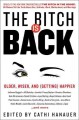
The Bitch is Back: Older, Wiser, and (Getting) Happier


In this second collection edited by Cathi Hanauer, (The Bitch in the House) over two dozen authors (nine from the original collection) reflect on being a woman in the modern world, feminism, and yes, getting older.  These essays, on topics ranging from relationships with husbands, exes, mothers, finding new men friend, having a baby using IVF without a partner, sex after menopause, co-parenting, and divorce, are brutally honest, but offer a light touch, assuring women we WILL get through it, gracefully, and maybe come out even better than before.  Best-selling author Ann Hood reflects on body image and a healthy weight both at her current age and as a younger woman who worked as a flight attendant during a time when a “perfect” physique was required.  Lizzie Skurnick writes about her decision to get pregnant without a partner, including her family’s reaction, her longing to have a “husband” during the pregnancy and the “what am I doing” moments when she realized how much money she had already spent on getting pregnant, but also how much more money she was going to spend over the course of her child’s lifetime.   The essays are divided into four sections (Me, Myself, and My Midlife Choices; Sex, Lies and Happy(ish) Endings; To Hell and To Hold; and Starting Over making it easy to dip into a section as the mood (or mood swing) strikes.  Read the essays that best suit your current place in life, read the essays written by your favorite writers, but don’t miss a single word in this entertaining, wise collection.

Saturday, October 29, 2016

New For November

Moonglow by Michael Chabon

This story of a family, told from the point of view of an unnamed dying grandfather slowly reveals the light and shadows of a marriage and a family, as well as the social context of their existence, as a grandson sees the history of the family he thought he knew in a different light, much the way moonlight reflects and refracts light with shimmering prose and insights.  As a grandson sits by this dying grandfather’s bedside, he tries to glean the last bit of information and family secrets his grandfather has to offer.  In a family that kept secrets as a way of life, the grandson learns more about his grandparents’ marriage than he was ever able to observe as a young child or a young man; he learns of his grandmother’s life growing up in France during World War II and her coming to America and living with a man who lies about his short time in prison during their marriage, a lie which she easily saw through.  Technology and space exploration and rockets are backdrops to this story which often feels more like a reflection or refraction, an autobiography than a novel, all with Chabon’s signature style, carefully observed, characters that are both new and familiar and footnotes to boot.   A November www.libraryreads.org pick. 

Faithful by Alice Hoffman


Alice Hoffman’s books have always been touched with angels, good and bad, and her latest novel is no exception.  Just before their high school graduation, Shelby Richmond and her best friend Helene were in a horrible car accident, one from which Shelby walked away but one that left Helene in a coma hovering between the now and the hereafter.  Shelby spends the next years of her life wandering around also in an in between place while Helene, ensconced in a hospital bed in her childhood home, seeming unaware of what is going on around her, becomes a shrine to which people make a pilgrimage touting Helene’s ability to heal what ails them just by being in her presence.  The one person who probably needs Helene’s miracles, and forgiveness, the most is Shelby who cannot bring herself to visit her old friend.  Shelby follows a high school classmate to Manhattan after Ben professes his love for her, but she still has a hard time feeling anything except for Chinese food and now abandoned dogs; as she navigates a new city she learns there are souls just as lost as she, some more, learns to make friends, and yes, love again, all the while, being guarded by someone who knows her, someone who is real but is not ready to be seen until an unlikely set of circumstances throws them together finally making Shelby feel complete.  Alice Hoffman’s books have a magical realism to them that makes you want to believe in something more than yourself and to never lose hope.  A November www.libraryreads.org pick.

I’ll You There by Wally Lamb

Sixty-year- Felix Funicello (yes, a distant cousin of THAT Funicello) is divorced and cheering on his young adult daughter Aliza as she embarks on a magazine writing career in Manhattan. One evening while setting up for his film club, the college professor is visited by the ghost of an early 20th-century female director who leaves Felix reels of film of his life, offering him the chance to re-enter his life in order to gain, perhaps, a new appreciation of the women in his life and how he got where he is today and where he might go from here.  As Felix revisits his life he sees his mother and sisters as he saw them as a child, but in the back of his mind he can draw on the knowledge and experience of a sixty-year-old as he “watches” the movies from the inside out.  He learns the circumstances of his sister Frances’s birth, a story that would have been enough as a focus for the entire book, but rather Lamb turns these memories and revelations into ways for Felix to understand his young adult daughter more and support her as she tries to break into journalism in New York City and becomes a mother herself.  Charming and witty, this book offers social history from feminism to pop culture.   A November www.libraryreads.org pick.


Say No More by Hank Phillippi Ryan

Boston reporter Jane Ryland is on her way to interview a college administrator about date rape on campus when she and her producer witness a hit and run, unwittingly ruining an alibi, stumbling into something that she’d be better off nowhere near.  On the other side of town, her secret fiancĂ© homicide detective Jake Brogan is investigating the drowning death of Hollywood screen-writer, local adjunct professor Avery Morgan.  In Avery’s community, The Reserve, the residents are quiet and keep to themselves, but Avery’s next-door neighbor is particularly so making Jake have to work harder to find witnesses.  When Jane finds a young woman willing to go on the record about date rape, she quickly realizes that she may unwittingly have information that could help Jake, but how can she feed him the information without revealing her sources and how can she talk to the District Attorney about the hit and run she witnessed without compromising her position as a reporter and how can she and Jake ever tell the world about their engagement and get on with their lives without one of them giving up their livelihood?  Intricate plotting and an engaging, intrepid heroine and hero are trademarks of Ryan’s Jane Ryland series and her latest entry doesn’t fail to disappoint as Jane and Jake once again pursue parallel investigations that ultimately connect in most unexpected ways.  This series with its complex stories lines and complex characters is one not to be missed.  


Thursday, September 15, 2016

Coming in October...


Hungry Heart: Adventures in Life, Love and Writing by Jennifer Weiner
The New York Times best-selling author writes about her life [so far] with honesty, sometimes self-deprecation and humor, as she talks about growing up Jewish, overweight with a father who deserted the family when she was in high school, a mother who “came out” in middle age, Weiner’s time at Princeton University where she blossomed into the self-assured writer, her marriage and divorce, giving birth to her two daughters, her path to best-selling author even after walking away from a “big agent” when Weiner doesn’t life the changes she suggests for her first novel and how it feels to find out your father died of a drug overdose on the bathroom floor in his girlfriend’s apartment.  Weiner recounts growing up smarter but heavier than most of her peers and points to the moment (in high school) when she stopped trying to fit in and found out she really did fit in, just in a different way.  Often full of self-doubt, once Weiner realizes that she can’t control everything and can make decisions that are best for her alone (until she has her daughters) and doesn’t have to agree with or approve of other people’s decisions to still love them and be a part of their lives, as she is able to do with her mother who announces when Weiner is an adult, that she is a lesbian.  Weiner’s father is more difficult, but once she accepts what he is and that he made his choices because they were his choices and had nothing to do with her, she is able to move on and grieve his death. 
Full of wit and wisdom, Weiner feels good about herself---finally---and hopes she is able to project this positive feeling not only toward her daughters but to everyone’s life she touches.  This thoroughly enjoyable collection of essays will appeal to not only fans of Weiner’s novels but anyone who enjoys an engaging memoir.

Little Boy Blue by M.J. Arlidge

In what may be her most personal case to date, Detective Inspector Helen Grace is called to a Southampton night club where she realizes she knows the victim who has been asphyxiated after what looks like a night of bondage; she quickly realizes that her double life may be revealed and all her secrets will come out, possibly ruining her career.  A second victim, one who holds Helen Grace’s secrets as well sends Helen to her superior Gardam to confess her connection to the victims, but in a final, very personal twist, Helen finds that she has been outsmarted by someone surprising and unexpected and finds her very freedom on the line.  Full of twists and turns, this latest entry into this series delves even deeper into Helen’s psyche than previous novels and leaves readers with a cliffhanger that will have them breathless until the next installment is released.

News of the World by Paulette Jiles
In post-Civil War Texas, retired and widowed Captain Kidd ride from town to town earning his living reading newspapers to audiences full of those eager for news of the world.  In Wichita Falls he is offered a $50 gold piece in exchange for delivering ten-year-old Johanna to her people in San Antonia four years after being kidnapped by the Kiowa, living as one of their own since.  Kidd agrees to the 400-mile journey, meeting with difficulties he imagined and those he didn't, forming a unique bond with this unsettling young girl who is strong-willed and has no memory of her past being raised by European parents and their ways.  Johanna goes along with Kidd, if not unwillingly, reluctantly, but soon learns that she needs him for protection, food and shelter and comes to trust Kidd for her basic needs and eventually companionship.  Kidd’s initial reluctance fades as well as he learns to communicate with Johanna and comes to realize he may need her as much as she needs him, leading to a surprising decision in this gorgeously written novel with prose and sparse and precise as the barren Texas landscape through which Kidd travels.

Small Great Things by Jodi Picoult 

Ruth Jefferson has been working as a labor and delivery nurse in a Connecticut hospital for over twenty years.  She is stunned when a white supremacist couple tells her supervisor that they don’t want Ruth, or any other African American staff member to touch their baby; to Ruth’s surprise, her supervisor complies and a note is placed in the patient’s file.  The next day, baby Davis goes into distress and Ruth is the only personnel in the nursery at the time.   If she intervenes, she may lose her job; if she doesn’t, the baby may die.  Making a decision, Ruth performs CPR and participates in the team’s efforts to save the baby, efforts which ultimately fail.  What happens to Ruth next is unthinkable, as she is charged with the murder of the baby.  Arrested and incarcerated, Ruth finds herself in an unbelievable situation, a situation which she has certainly read and heard about over the years but never expected to find herself, or a family member in.  Public defender Kennedy McQuarrie takes Ruth’s case but tells Ruth that her charges have nothing to do with race, but rather her actions on the fateful night, but Ruth isn’t sure she agrees.  As Ruth, released on bail, tries to maintain a sense of normalcy for herself and her son, she, and Kennedy, and even her sister who has chosen to embrace her African American heritage, leading a different life than Ruth has chosen for herself, all begin to realize how race affects more things than the seemingly obvious, and the things they, and we, were brought up to believe may not be as cut and dry as they do at first blush.  Even the hateful father of the dead baby comes to realize that not everything is as it seems and that changes everything for everyone.  Picoult once again tackles difficult feelings and situations with an openness and honesty that leave no easy answers.  She is careful not to make too many assumptions and, and in a note at the end of the book, admits to shortcomings and pitfalls she ran up against writing about these sensitive topics and the attempts she made to overcome and understand them.  An epilogue at the end of the novel ties all ends up perhaps a little too neatly for some, but does offer hope and in some cases, even redemption.

Just Jennifer

Fortress by Danielle Trussoni

In her second memoir, the author of the religious thriller Angelogy recounts her marriage and the time she spent living with her family in a medieval castle in a small town, Aubais (which ominously rhymes with “obey”)in the south of France in a last ditch attempt to save her marriage.  Trussoni met her Bulgarian husband Nikolai during her time at the Iowa Writers’ Workshop and was completely swept off of her feet; Nikolai charmed Trussoni and her two-year-old son Alex and she readily agreed to marry him.  Visa and immigration issues led the couple to move to Bulgaria where they lived with Nikolai’s parents and Trussoni uttered her first Bulgarian words when she said “I do” at her wedding; already several weeks pregnant, Trussoni assumed the family would be able to return to the United States; not so: Trussoni, who was beginning to feel trapped, could return to the States (with her son) to give birth but her husband would not be able to accompany her.  Once their daughter was born, the small family never seemed to completely meld.  Nikolai had a daughter from his first marriage, a daughter her rarely saw, and though he was very attentive to his new daughter Nico, he and Trussoni where faltering.  Trussoni thought if the family was to start over together, maybe in a different country, things would be better and so she found a medieval castle in France, a castle with secret passages and secrets rich in history from the Crusades through the Nazi occupation of France. Instead of working its magic on the family, it seemed to have the opposite effect on Trussoni’s husband and eventually the two were living in separate sections of the castle sharing “custody” of their young daughter.  A divorce was inevitable and despite Nikolai’s best efforts, Trussoni was granted full custody of their daughter, another daughter Nikolai no longer has contact with.  Living in New York City, Trussoni is able to view this time in her life with a certain clarity, if not at times with a dreamlike distance, as if the experience happened to someone else, and tells the story of this chapter of her life, with a visceral honesty that can only come from a seasoned writer and observer.

Thursday, September 8, 2016

Congratulations to...

...our Grand Prize Winners:
  • HQ: Lisa P.
  • NC: Augustmom
  • SC: Kayleen
  • Affiliate Libraries: lets read (Holland)

Clinton Cash

Author: Peter Schweizer
Stars: 5
Review by:bob

Very detailed ,,,,but fees were made to the Clintons by entities with matters pending before the US State Dept.


The Red Notebook

Author: Antoine Laurain
Stars: 5
Review by: KM


Truly, a gem. It's small, short and a sophisticated delicacy. Surely you do not wish to pass by a deftly penned quiet Parisian romance?
 

A Week in Winter

Author: Marcia Willett
Stars: 3.5
Review by: BookDancer

Reminiscent of Rosamunde Pilcher's works, centering on a beloved family home in Cornwall, this novel follows the everyday dramas, romances and secrets of several families.  I love "cosy reads" and this is one of them!
 

Johnstown: the Day the Dam Broke

Author: Richard O'Connor
Stars: 4
Review by: Mandy Apgar


The day in question was May 31, 1889 - when the mud dam holding up the waters of Conemaugh Lake in Western Pennsylvania split (after a deluge of rain) and the resulting flood destroyed the town below, leaving over three thousand dead. Efforts to repair the dam (which was often plugged with sticks) were fruitless but constant and there wasn't a resident in Johnstown that wasn't afraid of the monster. But many could not afford to leave, and as the area's prices were so low (kept that way as an incentive by the area mills) they stayed. And who plugged the dam with sticks, refused to do anything when he rains came and the dam spouted torrents? The wealthy members of the fishing club with their lakefront houses of course. They didn't have to look at the thing. They didn't get their houses flooded, or swept away when the dam burst. Or incinerated when a fire broke out amidst the ruins. They didn't have to worry about a bloody thing but at least many were smart enough to pack away and never return after the waters receded. Johnstown attracted its share of ghouls after, as well as angels like Clara Barton, and today the town has been rebuilt and stands somewhat as a memoriam to the floods of 1889 and a later (but heralded, and much less dangerous) one in 1937. Told via eyewitness accounts and very well presented.
 

Paradise of the Pacific: Approaching Hawai'i

Author: Susanna Moore
Stars: 4
Review by: Mandy Apgar


A history of the Hawaiian islands, but sadly lacking in any real explanation as to how they were settled, which is how this gets bumped from a 5. Accounts of the early kings, issues with missionaries, dealing with the influx of problems as more and more persons try to enforce not only their lifestyle but also try to "civilize" persons already far advanced in many ways. And of course the decimation of the native population and species by the influx of imported diseases and poaching. Then, a bit too quickly explained I think, the annexation of Hawai'i. A very well done and thoughtful book, but often sad for showing how poorly humankind has treated itself and nature at times.
 

Big Dead Place

Author: Nicholas Johnson
Stars: 2
Review by: Mandy Apgar

Two things that really annoy me are - irresponsibility and callousness. Sadly those are two personality traits common amongst persons apparently found running the Antarctic base station as well as managing it. The managers don't surprise me - although to find that the national science foundation takes away a shower curtain in a ladies room because of an unlisted but apparently very important reason is a bit off. What really ticks me off is all the work that I know I've put into the sciences, and that friends have, and we will never be as fortunate as some of the drunken schlubs that are able to hop from shooting puppies (and finding it funny) to skipping down there. One lady was hired because she drew penguins on her resume. Seriously. The author is one of the grunts, a day to day worker at the base, and he has his head on fairly straight, but some of these other people you just want to punch and it really takes away from the book.
 

Eligible

Author: Curtis Sittenfeld
Stars: 4
Review by: Miss Lucy


This is a modern day retelling of Pride and Prejudice. But it's so creatively done that it stands on its own as a contemporary novel.

But What If We're Wrong?: Thinking About the Present as if it Were the Past

Author: Chuck Klosterman
Stars: 3.5
Review by: Miss Lucy

This guy is brilliant. He even had me believing in the possibility that we could all be characters in a computer game (think Sims). I love how his mind works, although he says it doesn't serve him well on dates. I think he must be dating the wrong people if they don't appreciate the conversations they could have with this guy!
 

Savannah Breeze

Author: Mary Kay Andrews
Stars: 5
Review by: LG


Good book. I read it in one day.

The Oxford Illustrated History of Christianity

Author: John McManners (Editor)
Stars: 3
Review by: Mandy Apgar


Good, but very in depth, almost too much so for general reading and better for reference. It is an extraordinarily well put together book and is a credit to the editor, but it is quite huge. It is also not written like a newspaper or general book with a reading level lower down and I think that one has to have an interest in this in order to really appreciate it.

Peril at End House

Author: Agatha Christie
Stars: 3
Review by: Mandy Apgar

Hercule Poirot, along with his beloved "hound dog" so to speak, Arthur Hastings, are on holiday at a seaside resort when Poirot turns his ankle and is assisted by the lovely young Nick Buckley. Miss Buckley is the owner of End House, the "going to rack and ruin" residence at the end of the cove and apparently leads a charmed life. While sitting right in front of Poirot and Hastings she laments the local wasps and flinches. Later, while remarking on Nick's stated three recent escapes from sudden death, Poirot finds number four - a hole in the hat she left behind and a bullet in the dirt. Discussing things with her friends, who at first think she is a great liar, they get the lot to come around. But then, a double tragedy. The noted flier, Michael Seton, is stated to have died while attempting to be the first to go around the world. Then, while wearing Nick's wrap at a party, her cousin Maggie is shot. Things jump the shark a bit at the end when the long lost spouse of a character suddenly materializes just to try to shoot the person, only to die in the attempt, but Poirot's efforts to find the killer are so in earnest that he even convinces Nick to play dead as part of the show.
 

The Fatal Shore

Author: Robert Hughes
Stars: 3
Review by: Mandy Apgar

This was another one of those good but in a sad way. History is not always a happy thing and our forebears were indeed often total jerks. Case in point - all 600 odd pages of this for the most part. Famously started (for the most part) as a British penal colony, at the time that idea was bandied about Australia had already been settled for 30 thousand years! Not that the Aborigines' rights ever mattered much to those in power. Neglected, raped, mistreated, it is really disgusting to hear some of the things they were put through even aside of having their children literally stolen to be raised elsewhere. But there were some examples of kindness here and there - people begging to be sent with their beloved spouse, persons who dealt well with the Aborigines, early settlers in Sydney.