The Gospel of Anarchy by Justin Taylor (Harper Perennial, February 2011)
David is as landlocked in his current job as a telemarketer as is Gainesville, Florida. He is a college dropout and spends his spare time sifting through the porn of a fledging 1999 Internet. It is summer, Florida is hot and David is listless, making him susceptible to a new kind of life. Fishgut is a dilapidated house where a group of unlikely roommates live, social dropouts, anarchists and generally lost souls, creating a religious cult of sorts, waiting for a new Messiah, in the form of a hobo, who will save this motley group from the world, each other and themselves.
A dark and visceral novel, The Gospel of Anarchy explores the overdevelopment of a university town, the isolationism the world of computers, and the exploding internet, can encourage, corporate and government corruption and oppression and the zealousness of anarchists as they search for something, anything to believe in, to hold on to. As distasteful as David found his sterile cubicle, he finds he can thrive, or at least think, amidst his new friends dirt and garbage, until he is able to immerge refresh and renewed. This first novel will not grab everyone, but you will find yourself considering it from time to time and thinking about some of the contradictions and dichotomies Justin Taylor explores.
Tuesday, March 15, 2011
Wednesday, March 2, 2011
Just Jennifer
Never Knowing by Chevy Stevens (Minotaur, July 2011)
Sara thought it was important to know who her birth parents were, especially for her daughter and their medical histories and begins a search for the woman who gave birth to her, a search that reveals a terrible secret about her birth father, plunging her and her family into a downward spiral more horrible than her worse dream. Sara learns her birth was the result of a rape, her mother the only survivor of a campground serial killer who has never been caught. A leak catapults Sara’s story to the forefront and she is contacted by her father, John who begins a slow cat and mouse game with her, telling her he needs contact with her to stay calm…so he won’t kill again. FBI agents want to catch the campground killer and now have the perfect bait: Sara. Wanting to do the right thing, and not wanting any more blood on her hands than she feels she already has, Sara agrees and is drawn deeper and deeper into a web of deceit and terror, not knowing who she can trust and who will keep her safe. Just when she thinks it is over, there is one last piece that no one will guess or see coming, keeping the suspense and tension high until the very end. This is a psychological thriller of the finest kind. The pace is rapid and taut, keeping readers on the edge until the very end.
Just Jennifer
The Bird Sisters by Rebecca Rasmussen (Crown, April 2011)
Milly and Twiss are spinsters living a quiet life in rural Wisconsin. When a bird enters their house, they know they will receive visitors. A visit from an injured goldfinch brings a minivan with a mother and her children, a careless, thoughtless comment from Milly, and the dredging up of a sad story from another time that Milly remembers every day, yet hasn’t though about in years. Remembering the summer her elder cousin Bret spent with the sisters and their parents, Milly recalls her father, a man with dreams of the good life and a natural aptitude for golf, her mother, from a well-to-do family, trying to make the best life she can for her family, quietly putting up with her husband’s failed dreams. She retells the events that occurred that summer and decisions she made to try and hold her family together, events and decisions that will shape the rest of her life.
The Bird Sisters, a first novel, has an ethereal quality to it, alternating between the present and Milly and Twiss wonder through their lives, and the past, where adult decisions were made by children who would have to live with their decisions, and their effects on others, as adults. Rasmussen’s language is beautiful, her metaphors subtle, creating the private world of Milly and Twiss, inviting the reader in, but never allowing them to get too close.
Milly and Twiss are spinsters living a quiet life in rural Wisconsin. When a bird enters their house, they know they will receive visitors. A visit from an injured goldfinch brings a minivan with a mother and her children, a careless, thoughtless comment from Milly, and the dredging up of a sad story from another time that Milly remembers every day, yet hasn’t though about in years. Remembering the summer her elder cousin Bret spent with the sisters and their parents, Milly recalls her father, a man with dreams of the good life and a natural aptitude for golf, her mother, from a well-to-do family, trying to make the best life she can for her family, quietly putting up with her husband’s failed dreams. She retells the events that occurred that summer and decisions she made to try and hold her family together, events and decisions that will shape the rest of her life.
The Bird Sisters, a first novel, has an ethereal quality to it, alternating between the present and Milly and Twiss wonder through their lives, and the past, where adult decisions were made by children who would have to live with their decisions, and their effects on others, as adults. Rasmussen’s language is beautiful, her metaphors subtle, creating the private world of Milly and Twiss, inviting the reader in, but never allowing them to get too close.
Tuesday, February 22, 2011
Just Jennifer
The Wilder Life: My Adventures in the Lost World of Little House on the Prairie by Wendy McClure (Riverhead, April 2011)
Generations of little girls have grown up with Laura Ingalls Wilder; first with the books than during the seventies and eighties with the television show, but where does the myth end and reality begin? Wendy McClure becomes re-obsessed with one of her favorite childhood books Little House on the Prairie and sets out on a quest to find the real world of Laura, or the real world as she perceives it, and along the way finds that the Laura she thought she knew did not have the carefree, everything will work out life as portrayed in the books and later the television series. McClure learns that the producer of the television show had filed a lawsuit against the museum where the original Kansas homestead to stop them from using the name Little House on the Prairie---uh, isn’t that what it is? McClure also learns of the various prejudices the Ingalls had, especially toward the Native American Indians, and she finds evidence that Pa skipped out of Iowa once to avoid paying rent. In addition to visiting as many of the preserved sights as she was able to, McClure churns butter, makes vanity cakes and spends the night on a farm where she encounters a group of survivalists hoping to learn skills that will see them through the end of the world. McClure also reads many of the more scholarly works written about Laura Ingalls Wilder as well as the manuscript of Pioneer Girl an unpublished memoir among Rose Wilder Lane’s papers at the Herbert Hoover Library. More than just the story of trying to recreate Half-Pint’s adventures, The Wilder Life explores the concept of memoir as fiction and the social mores and conditions of an earlier time. Told with hope, wit, wisdom and even a big of self-deprecation, this book is an adventure that anyone who spent time in Walnut Grove or DeSmet will not want to miss.
Just Jennifer
Outside Wonderland by Lorna Jane Cook (St. Martin’s Press, March 2011)
Librarian and Readers’ Advisor extraordinaire Nancy Perl (author of the Book Lust series) recommends you give a book a fifty-page chance before giving up on it, which is exactly what I intended to do with Outside Wonderland. Several hours later, I was still reading. Outside Wonderland is the story of three siblings, Alice, Griffin and Dinah (all named after characters from Alice in Wonderland), whose mother died when they were seven, four and one, and whose father died six years later while they were in Greece. Raised by their grandmother Joan, the trio has issues, individually and as a group, but in spite of having very few redeeming qualities, there is something about this trio that makes you keep rooting for them. The plotting is often predictable: Alice is an actress who has taken many casual lovers over the years and now may have found Mr. Right… and his son; Griffin and his partner Theo are at odds over trying to adopt a child that Theo desperately wants and Griffin is uncertain about when Dinah shows up pregnant from an uncharacteristic fling she had while on a cruise.
Watching over them in a Greek Chorus sort of way are their parents from Here, commenting on their children’s lives and trying to give them a push in the right direction. These scenes are a bit precious, but they do give more background and another perspective at times.
Do not be tempted to read ahead. The first sentence of the epilogue may well be the best sentence of the book as it startles, saddens and then relieves all at once, but it will be a spoiler if read too early. This book will not hold everyone’s interest, but give it fifty pages and you might just be surprised to find yourself unexpectedly down the rabbit hole as well.
Librarian and Readers’ Advisor extraordinaire Nancy Perl (author of the Book Lust series) recommends you give a book a fifty-page chance before giving up on it, which is exactly what I intended to do with Outside Wonderland. Several hours later, I was still reading. Outside Wonderland is the story of three siblings, Alice, Griffin and Dinah (all named after characters from Alice in Wonderland), whose mother died when they were seven, four and one, and whose father died six years later while they were in Greece. Raised by their grandmother Joan, the trio has issues, individually and as a group, but in spite of having very few redeeming qualities, there is something about this trio that makes you keep rooting for them. The plotting is often predictable: Alice is an actress who has taken many casual lovers over the years and now may have found Mr. Right… and his son; Griffin and his partner Theo are at odds over trying to adopt a child that Theo desperately wants and Griffin is uncertain about when Dinah shows up pregnant from an uncharacteristic fling she had while on a cruise.
Watching over them in a Greek Chorus sort of way are their parents from Here, commenting on their children’s lives and trying to give them a push in the right direction. These scenes are a bit precious, but they do give more background and another perspective at times.
Do not be tempted to read ahead. The first sentence of the epilogue may well be the best sentence of the book as it startles, saddens and then relieves all at once, but it will be a spoiler if read too early. This book will not hold everyone’s interest, but give it fifty pages and you might just be surprised to find yourself unexpectedly down the rabbit hole as well.
Just Jennifer
Say Her Name by Francisco Goldman (Grove, April 2011)
In a fictionalized memoir, author Goldman details his meeting, courtship and marriage to the much younger author Aura Estrada. In spite of their age differences, the two had were kindred spirits and had a successful marriage. Just before their second anniversary, Aura is killed in a surfing accident while in Mexico and Goldman must rebuild his life without the woman whom he had grown to love so fiercely in such a short period of time, with such passion he often feels he will never heal. Told in the form of a novel to protect the couple’s friends and family, and to preserve some of the intimacy the couple shared, you will quickly forget that you are not reading the biography of a great love story. Goldman’s language is beautiful, story told with an elegant gentleness, that slowly reveals a poignant and heartbreaking tale.
Thursday, February 10, 2011
Just Jennifer
Learning to Swim by Sara J. Henry (Crown, February 2011)
While Troy Chance is returning to Lake Placid on a Lake Champlain ferry she sees a bundle being thrown in the frigid lake from a ferry going in the opposite direction. Almost instinctively she realizes the bundle is a child and she dives in after it even though she is not a strong swimmer. She rescues a little boy of about five or six years old from the frigid water and finds herself fiercely attached to the boy and determined to allow no further harm to come to him. As a freelance writer she is able to make a trip to Canada where she finds the boy’s father, a wealthy businessman. Satisfied that Philippe had nothing to do with Paul’s abduction, Troy brings Paul back to his father’s house; his father has moved during the time that Paul and his mother were abducted (his mother is presumed dead) and asks Troy to stay and help Paul get acclimated to his new home as he seems as attached to Troy as she is to him. The longer Troy stays with Philippe and Paul, the more attached she grows to both of them and the deeper she gets into the mystery of what happened to Paul and his mother; before long she finds herself chasing kidnappers and murderers back to Vermont, all the while missing what is write before her. Though the plot is interesting, the pacing is a little slow and the tension never quite builds, the story lacking the suspense it could have in a more seasoned writer’s hands.
Tuesday, February 1, 2011
Just Jennifer
Drinking Closer to Home by Jessica Anya Blau (Harper Perennial, January 2011)
Thre is a fine line between dysfunctional and eccentric and the Steins are carefully balanced, taking turns dipping from one side to the other. When Louise has a heart attack, Buzzy calls their three children against her wishes and Anna, Portia and Emery, with boyfriend Alejandro in tow, descend on the Santa Barbara hospital room where they sort out their adult lives and reminisce, perhaps looking for answers, in their childhood. The scene shifts effortlessly between the present day, Anna unhappy in her marriage having many affairs, Portia’s marriage on the brink of divorce, and Emery and Alejandro deliriously happy, on the brink of fatherhood if one of the girls will donate their eggs to their progeny, and the trio’s childhood which was anything but traditional. Each character, the children especially, are drawn with a clarity that will allow you to see how each arrived at their current place in life and where they can go from there. Many difficult subjects are touched on, anorexia, sex addiction, homosexuality and drug and alcohol use, but each is handled with such aplomb that it seems perfectly natural for this family as they work their way through these issues. The writing is honest and poignant, unforgiving and tender creating an unforgettable family that you will never wish is your own, but that you will be glad to visit over and over.
Tuesday, January 25, 2011
Just Jennifer
Great Philosophers Who Failed at Love by Andrew Shaffer (Harper Perennial, December 2010)
A short, entertaining book Great Philosophers Who Failed at Love briefly outlines the love lives of some of the world’s greatest thinkers, ancient and modern, proving that great thinkers definitely do not make the best loves. From Diogenes to Augustine of Hippo to Abelard, Nietzsche and Ayn Rand, Shaffer discusses the successes, and more often failures, of each philosopher. Many of the love affairs ended in the death of one of the partners, several resulted in illegitimate children and some, in the case of Simone de Beauvier and Jean Paul Satre, lovers for 51 years, the adoption of their younger lovers, in Beauvier’s case, her lesbian lovers. Fact is often stranger than fiction as illustrated in these short vignettes. Each section ends with “in his [her] own words” and provides an appropriate quote. The sections are heavily, and often humorously, footnoted. The entries are arranged alphabetically rather than chronologically adding to the lighthearted feel of the entire affair.
Just Jennifer
A Cup of Friendship by Deborah Rodriguez (Ballantine, January 25, 2011)
Expat Sunny is an American running a coffee shop in Kabul that caterers to other Americans living in Afghanistan. When she finds Yazmina seeking refuge at a local shelter, Sunny takes the young woman under her wing and sets out to learn the secrets that keep Yazmina’s eyes from smiling when the her mouth smiles. As other Western women, including Candace, a wealthy American who is not sure what to do with her new found freedom and all her money, and Isabel, a British journalist who has secrets of her own. Also in Sunny’s life is Halajan, an older, local woman who has lived a traditional life, but who has an independent side to her and also has a long-kept secret that she fears would bring shame to her son who is the security guard for Sunny’s restaurant. As all of these women converge on Sunny’s oasis, amidst the threats, bombing and destruction of Kabul, they turn to each other and inside themselves to find the strength to continue and to make their lives better. Sunny, out of all the characters, is the least developed; she often seems as she is putting up a false, sunny front for those around her. It is when things at the café get their worst that Sunny’s true colors begin to shine and we begin to see what she is truly capable of. A Cup of Friendship will be the jumping off point for many to learn more about modern day Kabul and women’s roles in Afghanistan, both women native to the country, those working in it temporarily and those born elsewhere who are making it their home. Sunny’s coffee shop is welcoming and inviting, the kind of place you will want to tuck into and visit often.
Saturday, January 15, 2011
Just Jennifer
Crossing the Heart of Africa: an Odyssey of Love and Adventure by Julian Smith (Harper Perennial, December 2010)
In 1898, British adventurer Ewart Grogan began his quest to navigate the length of Africa from Cape Town to Cairo for the love of a woman. The step-father of Ewart’s beloved Gertrude would not allow them to marry as he considered Ewart an unsuitable husband for his step-daughter. Ewart decided to prove his worthiness by making this cross-continental trip. Over one hundred years later, travel writer Julian Smith is about to marry Laura, who he knows is the best woman for him, but he has doubts about himself and the concept of forever. Neatly weaving the narrative of his modern day (or as modern as possible through the jungles of Africa) with Grogan’s larger than life adventure, Julian Smith explores the wilderness, people and politics of Africa and its small, ever-changing nations at the dawn of the 20th century and just past the turn of the 21st century. These two stories are engaging enough on their own, but Smith adds an even more personal touch as he recounts, often in great detail, the life of his relationship with his soon to be wife. He writes of this journey with uncanny honesty, taking responsibility for his missteps and candidly expressing his self doubt. Crossing the Heart of Africa will appeal to the adventurer and romantic in all of us.
Friday, January 14, 2011
Just Jennifer
Little Princes: One Man’s Promise to Bring Home the Lost Children of Nepal by Conor Grennan (Greenwillow, January 2011)
After college, Conor Grennan got a job grew bored of and decided to ditch everything for an around the world adventure. Lest his odyssey make him seem too self absorbed and frivolous, Conor’s first leg of his journey is a three-month volunteer stint at an orphanage in Nepal---surely the Civil War the brochure cautions about can’t be all that bad. Conor quickly learns that conditions are much worse in Nepal than he imagined: there is abject poverty throughout the country; many people live in regions of the country that are for the most part unreachable; the Maoist rebels control much of the country and have many people living in fear for their lives and what little freedoms they have. What greets Conor at the orphanage is the innocence and hope that only young children can offer. He learns that most of the children are not orphaned but have been rescued from traffickers. Conor plans on putting in his three months at the orphanage and moving on, but the children affect him in ways that surprise him. After he completes his originally planned trip, he finds himself returning to Nepal, finding more children that need his help. He sets up a non-profit organization, Next Generation Nepal that not only provides the funding to help reunite children with their families, but runs a home in Nepal for these displaced children. As Conor risks his safety as he treks into the most remote regions of the country to find these children’s families, he learns a great deal about himself, but he also learns that many of these parents truly believed that these children would have a better life when they paid the trafficker to take them, and that they may not be able to care for them and offer them what Conor’s orphanage, and others like it, can offer the children Conor’s grace and humor and willingness to admit his shortcomings offer brief respites to the otherwise grave conditions described in this book. This book will be an eye-opening experience to readers who are unfamiliar with Nepal or know it only as the country where Mount Everest can be found or as a spiritual retreat. Readers will be touched by the children and the way they changed Conor’s life as much as he has changed theirs. Fans of Three Cups of Tea will want to put this at the top of their New Year’s “to be read” list.
Wednesday, January 5, 2011
Just Jennifer
The Lake of Dreams by Kim Edwards (Viking, January 4, 2011)
Lucy, at a pivotal moment in her young life returns to her home town in upstate New York when her mother fractures her wrist in a car accident. Leaving The Lake of Dreams shortly after her father’s death ten years earlier, Lucy has a lot of loose ends and ghosts awaiting her return and quickly sees that life has continued in her absence, leaving her many things to grapple with. Lucy must face the unresolved relationships she left: with her mother, her brother Blake and Keegan Falls, the one that might have been, but now never can be. Lucy has not put down roots in the past ten years, though she has been living in Japan with Yoshi whom she met while doing humanitarian work in Jakarta. In spite of her wanderlust and unwillingness to face past ghosts, Lucy begins a quest to learn about her family’s past when she finds a cache of letters and suffragette documents in an old window seat along with a small blanket with a very unusual border. This motif is also found in stained glass windows in a local chapel that may be torn down if the local wetlands are developed and not preserved. Lucy searches for clues to her family using the stained glass windows and their creator, certain her long-lost great aunt was involved with the artist. There is a lot going on in this book, a mysterious ancestors, a grieving family, lost loves and land preservation (even that has two sides, the Native Americans who claim it and the environmentalists who want to save the local flora and fauna) but Kim Edwards ties all the sub-plots together neatly, if a little too sweetly at times. Fans of The Memory Keeper’s Daughter have been waiting a long time for Edwards’s next book and most will not be disappointed.
Another novel, completely different in its tone, released this month also has stained glass and women’s rights at the turn of the twentieth century at its forefront.
Clara and Mr. Tiffany by Susan Vreeland (Random House, January 11, 2011) takes us to the Gilded Age and explores the life of Clara Driscoll who worked for Louis Comfort Tiffany in his factory and is said to have come up with the idea for the now ubiquitous Tiffany lamp shade that is so familiar. Carefully researched, this book not only explores the lives of working women at the dawn of the new century, but also discusses other social issues, such as the living and working conditions of the poorest of the poor. Larger than life characters and descriptions of neighborhoods of Manhattan from the Upper West Side to the Fifth Avenue Mansions to the early Bohemians add to a rich atmosphere. Clara is fully realized as she deals with being a widow and learns to fit into a man’s world, leading her life as she wishes and a life that will make her happy and fulfilled.
Lucy, at a pivotal moment in her young life returns to her home town in upstate New York when her mother fractures her wrist in a car accident. Leaving The Lake of Dreams shortly after her father’s death ten years earlier, Lucy has a lot of loose ends and ghosts awaiting her return and quickly sees that life has continued in her absence, leaving her many things to grapple with. Lucy must face the unresolved relationships she left: with her mother, her brother Blake and Keegan Falls, the one that might have been, but now never can be. Lucy has not put down roots in the past ten years, though she has been living in Japan with Yoshi whom she met while doing humanitarian work in Jakarta. In spite of her wanderlust and unwillingness to face past ghosts, Lucy begins a quest to learn about her family’s past when she finds a cache of letters and suffragette documents in an old window seat along with a small blanket with a very unusual border. This motif is also found in stained glass windows in a local chapel that may be torn down if the local wetlands are developed and not preserved. Lucy searches for clues to her family using the stained glass windows and their creator, certain her long-lost great aunt was involved with the artist. There is a lot going on in this book, a mysterious ancestors, a grieving family, lost loves and land preservation (even that has two sides, the Native Americans who claim it and the environmentalists who want to save the local flora and fauna) but Kim Edwards ties all the sub-plots together neatly, if a little too sweetly at times. Fans of The Memory Keeper’s Daughter have been waiting a long time for Edwards’s next book and most will not be disappointed.
Another novel, completely different in its tone, released this month also has stained glass and women’s rights at the turn of the twentieth century at its forefront.
Clara and Mr. Tiffany by Susan Vreeland (Random House, January 11, 2011) takes us to the Gilded Age and explores the life of Clara Driscoll who worked for Louis Comfort Tiffany in his factory and is said to have come up with the idea for the now ubiquitous Tiffany lamp shade that is so familiar. Carefully researched, this book not only explores the lives of working women at the dawn of the new century, but also discusses other social issues, such as the living and working conditions of the poorest of the poor. Larger than life characters and descriptions of neighborhoods of Manhattan from the Upper West Side to the Fifth Avenue Mansions to the early Bohemians add to a rich atmosphere. Clara is fully realized as she deals with being a widow and learns to fit into a man’s world, leading her life as she wishes and a life that will make her happy and fulfilled.
Just Jennifer
666 Park Avenue by Gabriella Pierce (Avon, February 2011)
Jane Boyle is leading quiet but satisfactory life in Paris until Malcolm Doran, New York’s most eligible bachelor, sweeps her off of her feet and carries her back to New York as his fiancé where she meets her future mother-in-law who she learns is an honest-to-goodness witch, and not the good kind. The more Jane learns about her fiancé and his family, and her own past, the more she realizes the dangerous course she has set herself on. Without putting her New York friends in more danger than necessary she slowly puts the pieces together and soon doesn’t realize who she can trust; before she knows it, it’s too late and she is Mrs. Malcolm Doran and in a lot of danger. A fun mix of romance, the supernatural and Manhattan socialites, this is ripe for a sequel.
Just Jennifer
Hating Olivia by Mark SaFranko (Harper Perennial, 2010)
Max Zajack’s life as a struggling writer and musician is pretty much a disaster; he lives in cheap, roach-infested rooms & he can’t ever keep his dead end jobs long enough to make ends meet, but when he meets Olivia at a club one night, he thinks his life is taking a change for the better, when in reality, Max’s life begins a downward slide, about to spiral completely out of control. Max is completely obsessed with Olivia, and she with him. Olivia becomes domineering, controlling and emotionally manipulative leaving Max no way out. There is frequent, rough sex, volatile arguments, threats of leaving and then rough sex again, to prove, each to the other, that they can’t live without the other. As these two lost souls navigate life together, there is violence and unhappiness, but there is also a strange kind of love that you feel you will die without, if you don’t die in the living it. Not angry in its telling, Max relates an intense and visceral tale, exploring a love so obsessed it is ultimately destructive. The writing is edgy, the language raw, though there are carefully constructed, gentle sentences “…late summer passed like a lilac-scented dream…autumn had tossed its longer nights over the world like a soft blanket…” remind you that this is a love story after all.
Thursday, December 30, 2010
Just Jennifer
Brooklyn Story by Suzanne Corso (Gallery, December 2010)
Set in 1978 Bensonhurst, Brooklyn, Brooklyn Story is a coming-of-age tale about Samantha Bonti who is half-Jewish, half-Italian living in an Italian neighborhood, longing to be on the other side of the fabled bridge. Samantha lives with her Jewish grandmother and her converted-to-Catholicism mother who has a substance abuse problem and is on welfare, to the embarrassment of Samantha. Her best friend Janice sets fifteen-year-old Samantha up with Tony, half-Dutch, half-Italian, all twenty-years old, the best friend of Janice’s boyfriend Richie. Tony is very good looking, and always has money he’s willing to spend on Samantha, and Samantha is quickly drawn into his world, a world that is not all glitz and glamour as it first appears. Samantha accepts Tony’s overbearing ways as proof of his affection for her, but when he turns violent, she realizes she is in over her head and looks to the adults in her life, including an English teacher and a nurturing priest, for guidance.
The story becomes engaging, but Samantha’s strength of character and determination is hard to believe at times, especially given her young age. Certain things in life can make you grow up quickly, but I didn’t see that growth in Samantha, though she is an admirable young woman. The setting is very authentic and anyone who remembers 1978, especially the city, will remember the same sights and sounds Samantha describes. Brooklyn Story ends with hope for Samantha, leaving readers wondering what she will do next; a sequel is in the works according to the author’s website, which includes questions for discussion.
Saturday, December 18, 2010
Just Jennifer
The Fates Will Find Their Way by Hannah Pittard (Ecco, January 2011)
Nora Lindell disappeared the Halloween she was sixteen, leaving in her wake a neighborhood unsure of what happened, and a group of boys on whom she had a very lasting effect. This sparse, thoughtful novel is told in the first person plural, as the boys who were Nora’s playmates and classmates work through this event that haunts them, even into adulthood. Nora disappeared without a trace, and her true fate is never learned, but as each boy, or man, reflects on her disappearance, conjectures are made, some based on unconfirmed “Nora sightings” over the years. The enclave which has kept the boys safe for the first part of their lives now has a chink in its armor and everyone is left wondering what happened, how could it have been prevented and who will be next? With an economy of words, none wasted, the family life of each boy as a child and as an adult is revealed, as is the boy’s relationship with Nora. The boys become very protective of the other girls in their life after this incident, but the focus on the story is the boys and how Nora affected them before and after her disappearance. Nora becomes a symbol for what the boys have left behind as they grow into adulthood and for the part of each of us that will stay sixteen forever in our minds.
Thursday, December 9, 2010
Just Jennifer
You Know When the Men are Gone by Siobhan Fallon (Amy Einhorn Books, January 2011)
In eight short stories, connected through families at Fort Hood, Texas, Siobhan Fallon explores soldiers being deployed, deployed and returning home from deployment in Iraq or Afghanistan and the effects it has on the soldiers and the families they leave behind. Trying to fit in as a military wife, suspected infidelity, home and at war, cancer, relationships, children and the death of a spouse are all explored with sensitivity and grace, making the reader part of the story, not left feeling as if they were looking in on something. Fallon doesn’t leave any emotion out: loneliness, sadness, frustration, anger or despair; she writes with such intimacy that the reader becomes a part of Meg, David Mogeson or Carla’s world for a short time. Life in the military, especially for civilian wives, is largely unknown to the rest of us. New fiction author Siobhan Fallon gives us a glimpse into this unknown world and we leave a bit in awe of these men and women.
Just Jennifer
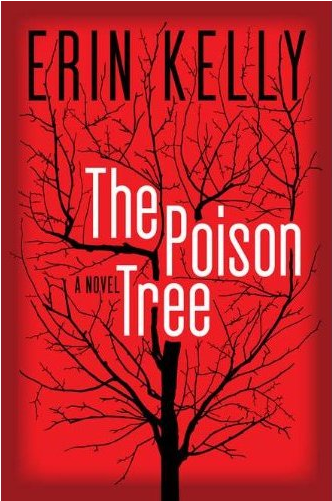
The Poison Tree by Erin Kelly (Pamela Dorman Books, January 2011)
Karen Clarke has lived a predictable, if somewhat boring, life until the summer she is twenty. Karen is just finishing up her degree as a multi-language linguist and meets Biba who seems exotic by comparison. Karen becomes totally absorbed with Biba’s seemingly carefree, bohemian lifestyle and allows herself to become immersed in that life which includes Biba’s older brother Rex. Rex and Biba’s casual lifestyle belies the underlying emotions surrounding their parents and lives growing up. Told ten years after the fateful summer, as Rex is being released from jail, the story seamlessly moves between Rex’s reassimilation into Karen, and their nine-year-old daughter’s life, and the summer when events spiraled out of control, ultimately causing Rex to go to jail and Biba to disappear from Karen’s life. The plot begins quietly, and quickly creeps up; before you realize it, you are totally immersed in Biba and Karen’s worlds. The pacing of the ending is a bit too fast and is over before you know it, but under the circumstances, that it probably all for the best.
Tuesday, November 30, 2010
Just Jennifer
The Paris Wife by Paula McLain (Ballantine, March 2011)
Ernest Hemingway lived a colorful, if angst ridden life; his early years are chronicled in this new novel, beginning in 1920 Chicago and tracing Hemingway’s rise to published author, following Hemingway and his first wife to Paris where they involve themselves with the artsy American ex-patriots, including Gertrude Stein, Ezra Pound, the Fitzgeralds and the Murphy’s, all living in Paris. Ernest meets his first wife Hadley when she is twenty-nine and he is twenty –one. After an intense, whirlwind courtship, the two marry and move to Europe with Paris as their base, traveling the continent while Ernest writes and begins his transformation into the great American novelist Papa Hemingway.
This book evokes the literary scene in Paris between the wars so realistically it is as if you have stopped for tea or scotch with one of the great writers of the time. Not only is the setting marvelous, but the transformation of Hadley of Hadley from an unsure homebody to the wife of a well-known figure, to a strong, independent woman who knows her own mind. McLain’s writing is so intimate that you will become immersed in Hadley and Ernest’s world and find the time passing much too quickly.
Ernest Hemingway lived a colorful, if angst ridden life; his early years are chronicled in this new novel, beginning in 1920 Chicago and tracing Hemingway’s rise to published author, following Hemingway and his first wife to Paris where they involve themselves with the artsy American ex-patriots, including Gertrude Stein, Ezra Pound, the Fitzgeralds and the Murphy’s, all living in Paris. Ernest meets his first wife Hadley when she is twenty-nine and he is twenty –one. After an intense, whirlwind courtship, the two marry and move to Europe with Paris as their base, traveling the continent while Ernest writes and begins his transformation into the great American novelist Papa Hemingway.
This book evokes the literary scene in Paris between the wars so realistically it is as if you have stopped for tea or scotch with one of the great writers of the time. Not only is the setting marvelous, but the transformation of Hadley of Hadley from an unsure homebody to the wife of a well-known figure, to a strong, independent woman who knows her own mind. McLain’s writing is so intimate that you will become immersed in Hadley and Ernest’s world and find the time passing much too quickly.